The best water filters for camping depend on whether you want a quick personal drink, a refillable bottle, or hands-free water for camp. These six picks cover different carry styles and include details to compare capacity, connections, and maintenance before choosing.
Quick Top Products
Sawyer Squeeze Water Filtration System
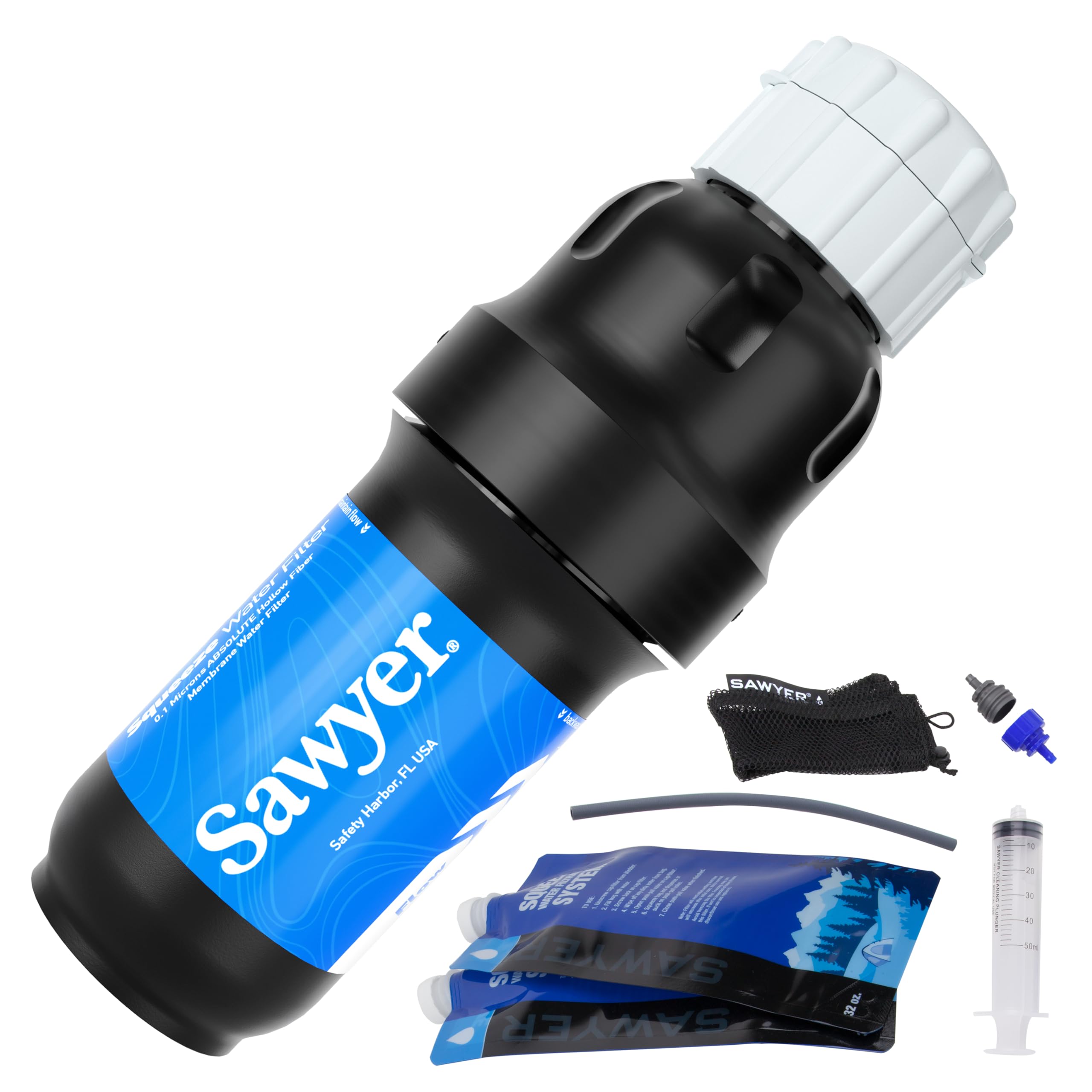
- The 0.1 micron absolute inline filter weighs 2 ounces.
- Two 32-ounce pouches roll tightly for packing.
- It connects to 28 mm bottles and hydration-pack adapters.
Best For: Campers who want flexible pouch, bottle, and hydration-pack connections.

Sawyer SP160 One Gallon Gravity Water Filtration System
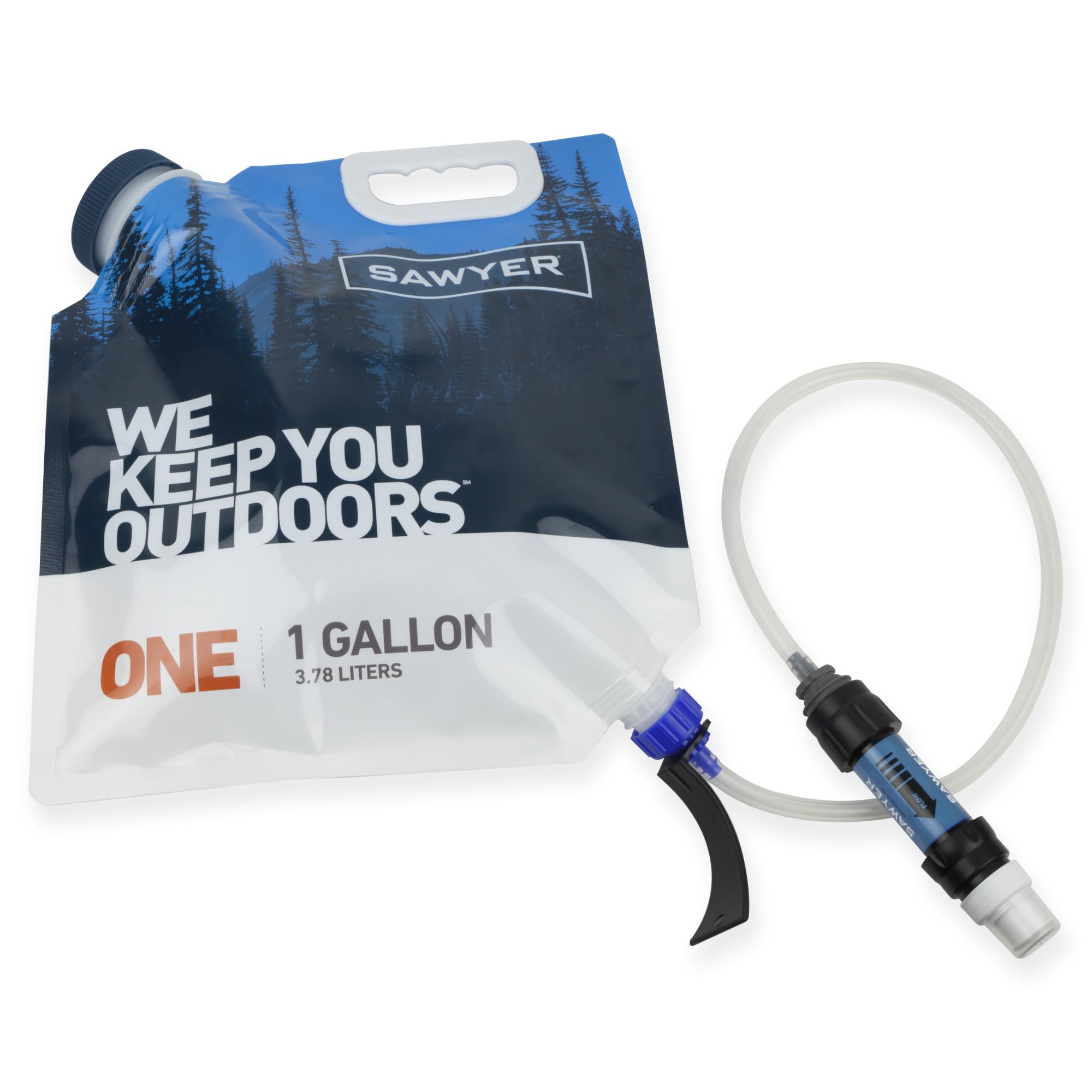
- It combines a 0.1 micron filter with a one-gallon reservoir.
- The bladder has a wide mouth and carry handle.
- The kit includes a gravity hose and adapters.
Best For: Groups or campsites that benefit from a hands-free gravity reservoir.
Waterdrop Gravity Water Filter Straw
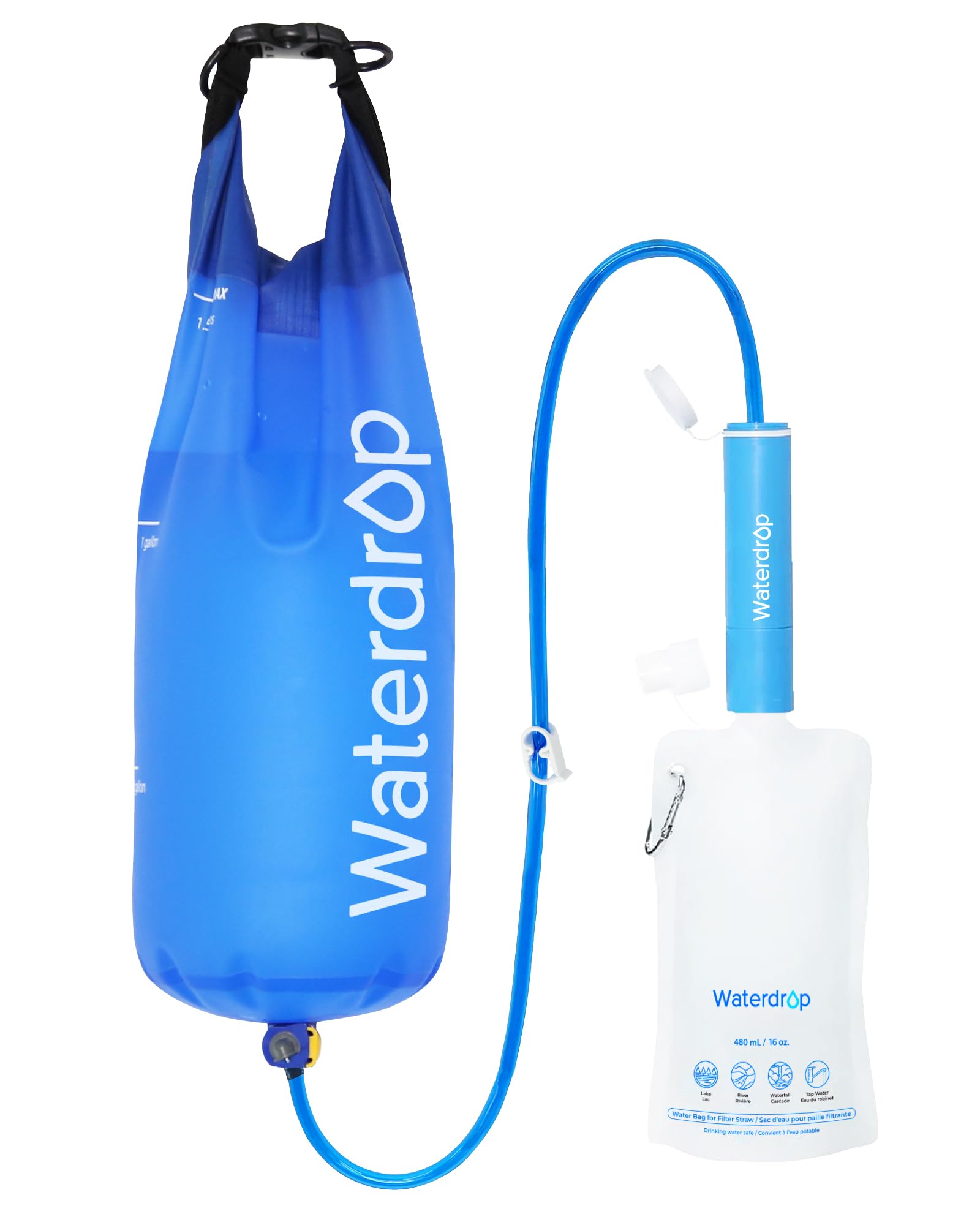
- The gravity bag holds up to 1.5 gallons.
- The straw uses five-stage filtration and a 0.1 μm membrane.
- Its flow rate is up to 700 ml/min and it can be backwashed.
Best For: Campers who want a gravity-fed bag with a backwashable straw filter.
Sawyer SP2129 Micro Squeeze Water Filtration System
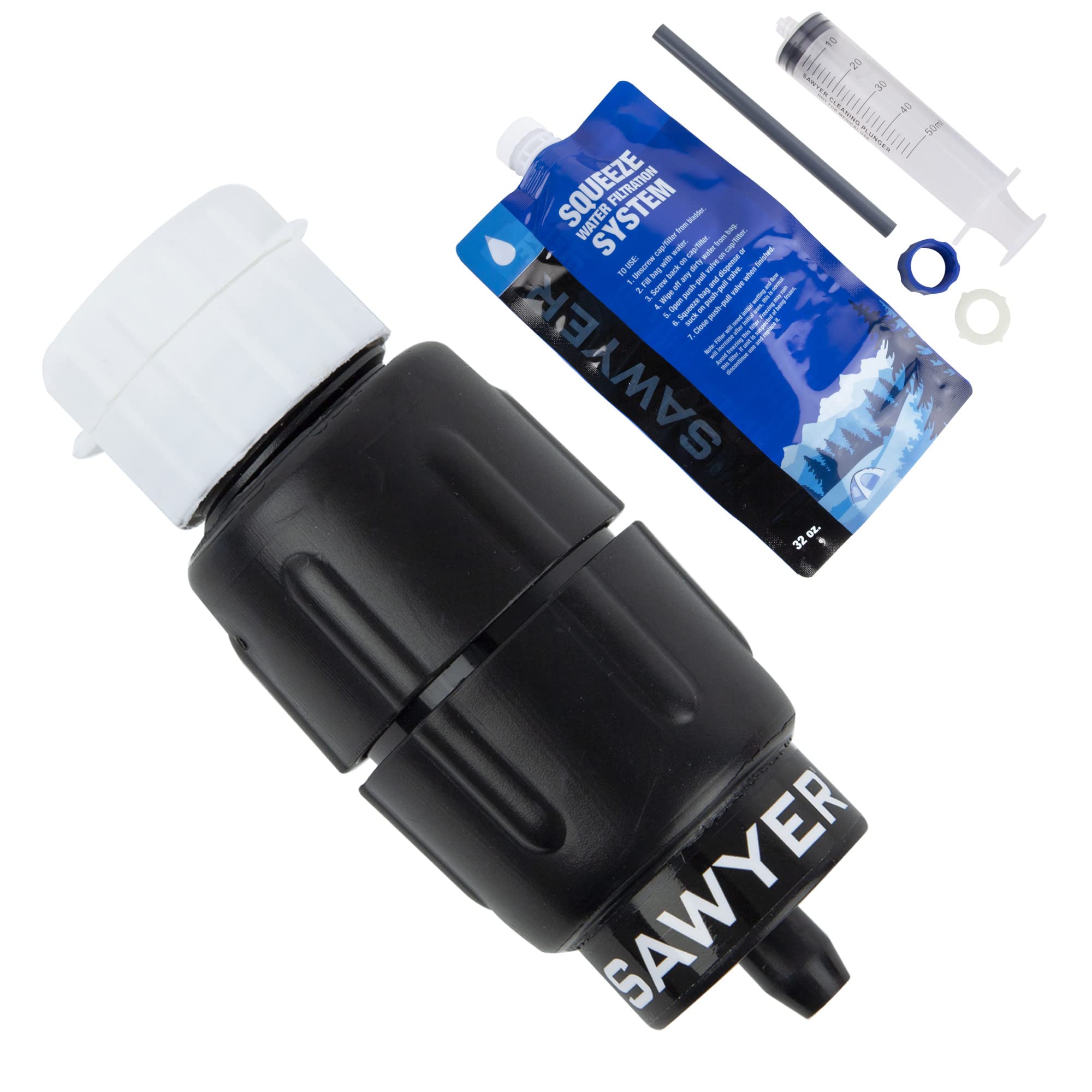
- The filter is rated up to 100,000 gallons.
- It includes a reusable 32-ounce pouch and drinking straw.
- The 0.1 micron filter weighs 2 ounces.
Best For: Solo hikers looking for a compact squeeze filter with a single pouch.
Sawyer SP140 Personal Water Bottle Filter
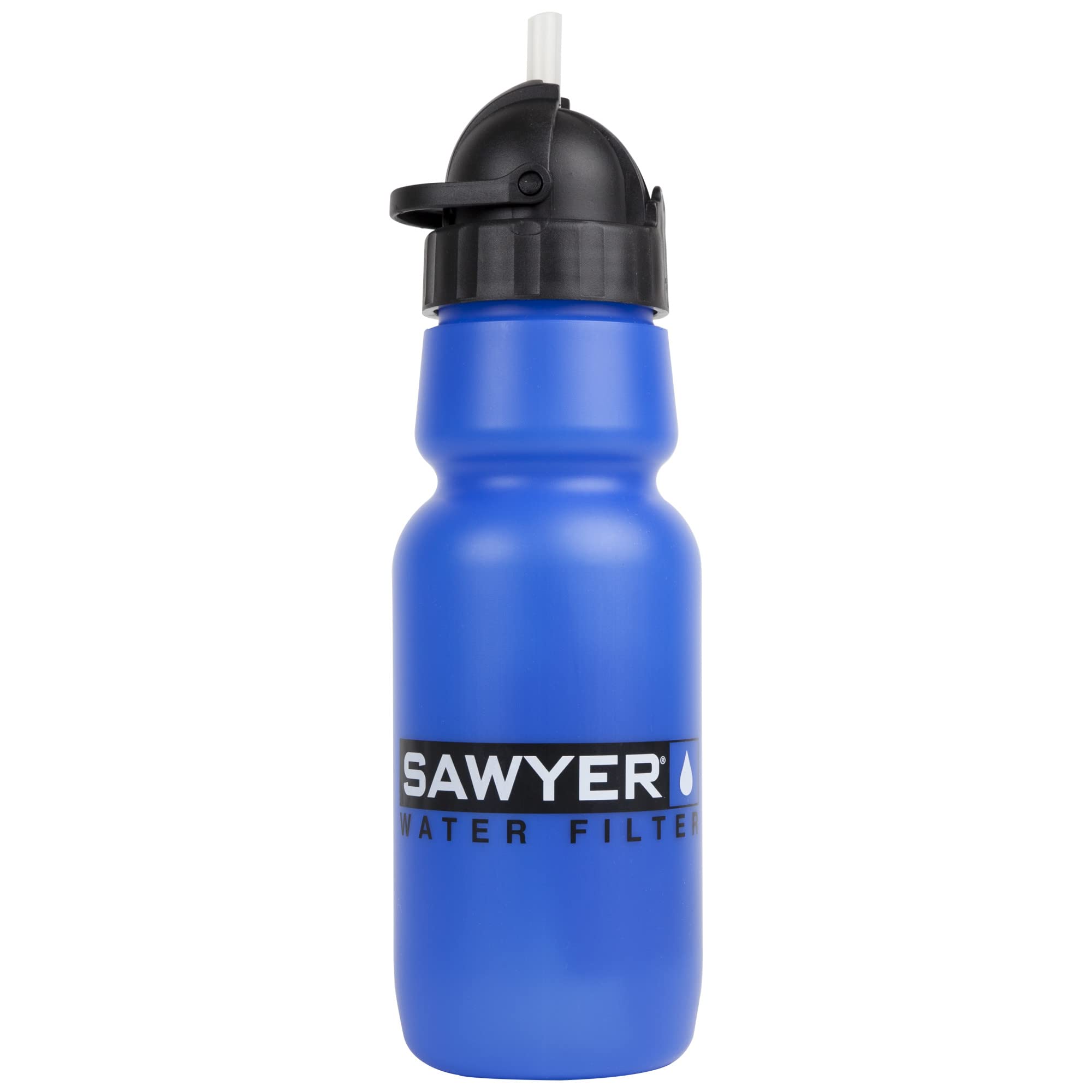
- It pairs a 34-ounce BPA-free bottle with a 0.1 micron filter.
- It includes a backwash syringe for field maintenance.
- The filter can be used inline with hydration-pack tubing.
Best For: Campers who prefer a bottle-format filter for individual drinking and refills.
Sawyer Products Mini Water Filtration System 4-Pack
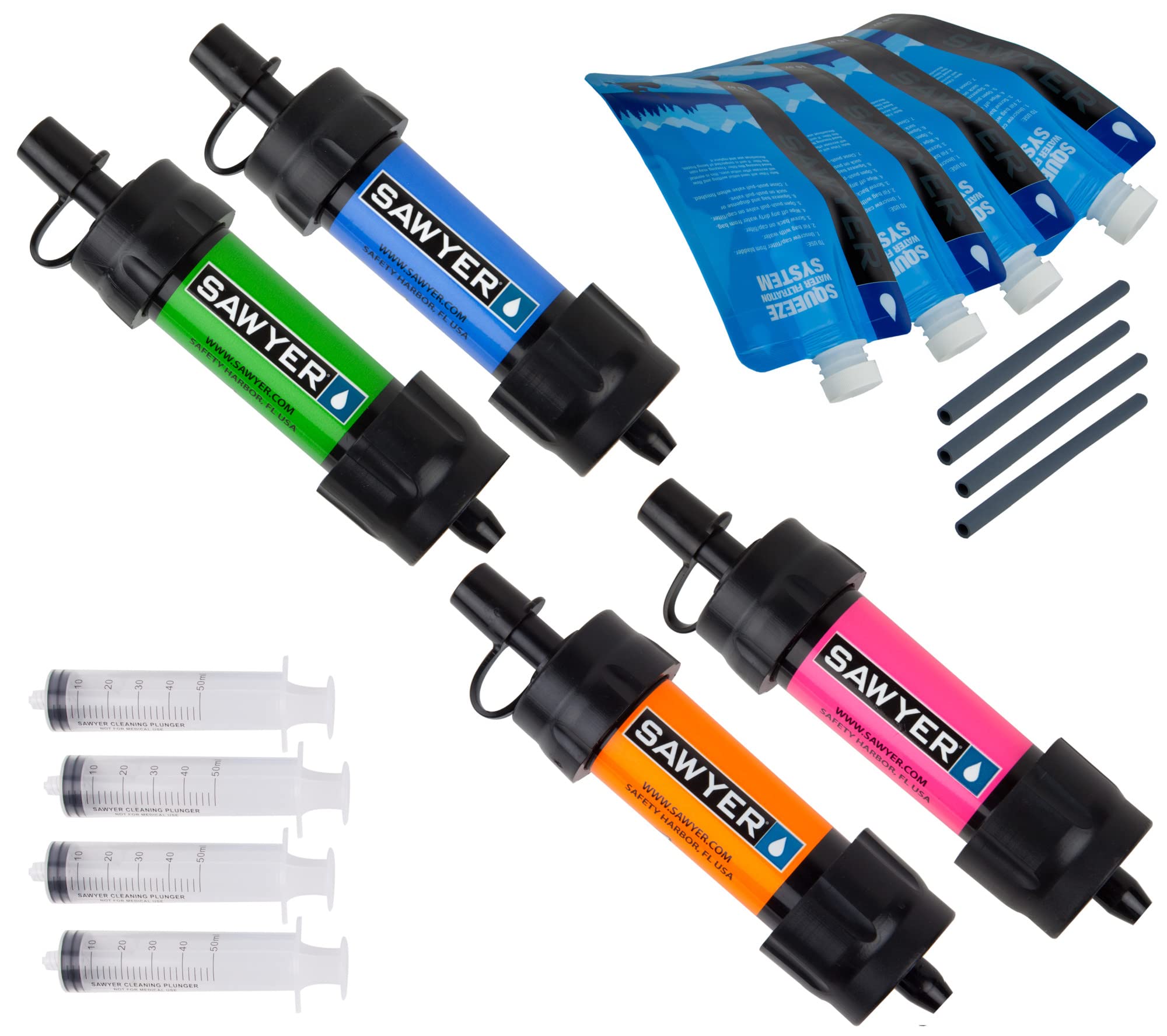
- The pack includes four MINI filters and four pouches.
- Each filter weighs 2 ounces and uses a 0.1 micron membrane.
- Each filter is rated up to 100,000 gallons.
Best For: Groups that want several compact filters and matching squeeze pouches.
Two-Pouch Squeeze Kit
Sawyer Squeeze Water Filtration System
The Sawyer Squeeze is a compact inline filter kit built around two reusable 32-ounce pouches. You can squeeze water through the filter into a bottle, drink through the included straw, connect it to standard water bottles with 28 mm threads, or use it in a gravity setup.
Its 0.1 micron absolute filter weighs 2 ounces, while the pouches roll tightly for packing. This flexibility suits backpackers who want to collect water and refill containers without carrying a dedicated bottle filter.
The kit includes adapters and a mesh storage bag, though the source does not specify its rated filter lifespan.
Best For: Campers who want flexible pouch, bottle, and hydration-pack connections.
| Pros | Cons |
|---|---|
|
|
Choose this kit if you want a filter that can serve as a squeeze system, bottle connection, or gravity setup. The two 32-ounce pouches provide collection capacity, while adapters broaden how it connects at camp.
Before buying, check that the 28 mm bottle threads or hydration-pack setup match the gear you already carry. Its filter weighs 2 ounces, but the complete kit also includes pouches, straw, adapters, and storage bag.
One-Gallon Gravity Reservoir
Sawyer Products SP160 One Gallon Gravity Water Filtration System w/Dual-Threaded Mini Filter, Blue/White/Clear
The Sawyer SP160 pairs a gravity hose and dual-threaded MINI filter with a one-gallon bladder. Its wide mouth is designed for faster filling, and a carry handle makes the reservoir easier to move around camp.
Gravity feeding can reduce the need to hold or squeeze a pouch while filtering. The system includes a cleaning plunger, coupling, and hose adapters, and the filter weighs 2 ounces.
It is intended for camping, backcountry treks, travel, and emergency kits. Consider whether a gallon bladder fits your packing style and whether the full reservoir capacity suits your group’s water routine.
Best For: Groups or campsites that benefit from a hands-free gravity reservoir.
| Pros | Cons |
|---|---|
|
|
This system suits a camp routine where a reservoir can hang or sit while gravity moves water through the filter. Its one-gallon bladder gives it a different role from a personal straw or bottle filter, and the wide mouth supports easier filling.
Check how you will carry and position the bladder, since the complete system’s packed dimensions and weight are not specified. The kit includes the hose and adapters needed for its gravity arrangement.
Large Gravity Bag and Backwash Straw
Waterdrop Gravity Water Filter Straw, Camping Water Filtration System, Water Purifier Survival for Travel, Backpacking and Emergency Preparedness, 1.5 gal Bag, 5 Stage Filtration, Pack of 1
Waterdrop’s gravity filter combines a straw with a bag that holds up to 1.5 gallons, offering a larger fill-and-filter approach for camp or emergency use. Its five-stage filtration uses a 0.1 μm ultrafiltration membrane, and the maker gives a maximum flow rate of up to 700 ml/min.
The straw can connect with water bags or bottles, and its backwash function is intended to clear the filter when flow decreases or after extended use. This setup is bulkier in concept than a personal bottle filter, so consider where you will fill and hang or position the bag.
Best For: Campers who want a gravity-fed bag with a backwashable straw filter.
| Pros | Cons |
|---|---|
|
|
Pick this option when a larger gravity bag and backwash feature matter more than carrying only a personal filter. Its stated capacity is up to 1.5 gallons, and the straw also connects to bottles or water bags.
The listed flow figure is a maximum, so actual camp conditions may differ. Before relying on it for a particular water source, verify that its treatment specifications fit your needs; the supplied details describe filtration stages and reductions in substances such as sediment and chlorine, but do not name microorganism reduction rates.
Micro Squeeze With 32-Ounce Pouch
Sawyer Products SP2129 Micro Squeeze Water Filtration System, 1 Pack, Black/Blue
The Sawyer Micro Squeeze kit includes a 32-ounce reusable pouch, drinking straw, cleaning parts, and a filter rated up to 100,000 gallons. The filter uses a 0.1 micron absolute inline design, weighs 2 ounces, and is sized to fit in the palm of your hand.
Its stated removal figures cover bacteria, protozoa, and microplastics. For camping, the included pouch provides a simple way to collect and squeeze water, while the straw supports direct drinking.
This is a focused personal kit; the details do not describe multiple pouches or a dedicated gravity reservoir.
Best For: Solo hikers looking for a compact squeeze filter with a single pouch.
| Pros | Cons |
|---|---|
|
|
This is a practical solo kit if one pouch is enough and you value a compact filter with a stated 100,000-gallon rating. It includes a straw and cleaning accessories, but the supplied details do not identify bottle-thread or hydration-pack connections.
Check how you plan to carry clean water after filtering and whether one pouch fits your trip. The filter’s 2-ounce weight refers to the filter itself, not the entire kit.
Filtered Bottle for Personal Refills
Sawyer Products SP140 Personal Water Bottle Filter, 34-Ounce,Blue
The Sawyer SP140 combines a 34-ounce BPA-free bottle with a 0.1 micron absolute hollow fiber membrane inline filter. It is designed for filling from a river, lake, or faucet, then drinking from the bottle.
The filter is described as field maintainable, with a backwash syringe included, and it can also be used inline with hydration-pack tubing. The bottle format keeps collection and drinking in one piece of gear, though it is less flexible than a kit built around separate pouches.
Confirm whether the bottle’s cap and tubing setup fit your existing equipment.
Best For: Campers who prefer a bottle-format filter for individual drinking and refills.
| Pros | Cons |
|---|---|
|
|
Choose the SP140 if you want to fill a bottle and drink from that same container, with the option to put the filter inline with hydration-pack tubing. The included syringe supports backwashing in the field.
It is a more integrated format than a separate squeeze pouch and filter, so consider how you will refill other bottles or supply a group. The details note that additional straws are not included with the newest model; check the cap fit for any compatible bottle you plan to use.
Four-Filter Group Pack
Sawyer Products Mini Water Filtration System
This Sawyer Mini offer is a four-filter pack, with four 16-ounce reusable squeeze pouches, drinking straws, and cleaning plungers. Each MINI filter is a 0.1 micron absolute inline unit weighing 2 ounces, and the filter rating is up to 100,000 gallons.
The notes also give removal figures for bacteria, protozoa, and microplastics. For a camping group, multiple filters can let individuals carry their own setup.
The tradeoff is that this is a multi-unit purchase with smaller included pouches than a larger shared gravity reservoir, so check whether the pack size and individual capacity suit your group.
Best For: Groups that want several compact filters and matching squeeze pouches.
| Pros | Cons |
|---|---|
|
|
Consider this pack for a group that wants separate compact filters rather than one shared reservoir. It includes four filter-and-pouch sets, but each pouch is 16 ounces, so plan on more frequent collection than with a larger camp reservoir.
The notes also say the filter can attach to standard disposable bottles and hydration packs. Since the complete kit’s packed size and weight are not specified, check how the four sets fit your shared or individual packs.
How to Choose Water Filters For Camping
How We Picked Water Filters for Camping
These six products cover different ways to treat and carry water at a campsite: personal straws and bottles, squeeze-pouch kits, gravity reservoirs, and a group pack. We prioritized standalone filter systems with a clear camping or outdoor use, then compared the included water container, connection options, maintenance details, and any stated filter specifications.
The pouch-only candidate was excluded because it does not include a filter.
The products suit different routines. A bottle filter keeps water and treatment together for one person, while a squeeze filter can transfer water into other containers.
Gravity systems add a reservoir for hands-free filtering, and the four-filter Mini pack provides separate personal setups for a group. Look at the whole kit, since filter weight alone does not describe the packed system.
Comparing Water Filters for Camping
Start with how you collect water and where you want clean water to end up. The Sawyer Squeeze supports pouches, standard 28 mm bottles, and hydration-pack adapters.
The SP160 and Waterdrop kits use gravity bags, with the SP160 built around a one-gallon bladder and the Waterdrop bag holding up to 1.5 gallons. Those capacities describe their reservoirs, not the amount of clean water carried in a separate bottle.
The Mini four-pack and Micro Squeeze both include personal squeeze pouches, but their included volumes differ. The four-pack contains four 16-ounce pouches, while the Micro Squeeze includes one 32-ounce pouch.
The SP140 takes a bottle-first approach with a 34-ounce bottle. Match these formats to your trip: a solo hiker may favor one compact setup, while a campsite serving several people may benefit from a reservoir or multiple individual filters.
Filter specifications also differ in what they tell you. Several Sawyer products specify a 0.1 micron filter and provide bacteria or protozoa removal figures.
Waterdrop gives five filtration stages, a maximum flow rate, and a backwash method, but its supplied details do not give microorganism reduction rates. Compare those claims against the water sources and treatment needs relevant to your trip, and do not treat a stated maximum flow or lifespan as a measure of the whole kit's convenience.
| Product | Standout features | Best for |
|---|---|---|
| Sawyer Squeeze Water Filtration SystemCheck Price |
| Campers who want flexible pouch, bottle, and hydration-pack connections. |
| Sawyer SP160 One Gallon Gravity Water Filtration SystemCheck Price |
| Groups or campsites that benefit from a hands-free gravity reservoir. |
| Waterdrop Gravity Water Filter StrawCheck Price |
| Campers who want a gravity-fed bag with a backwashable straw filter. |
| Sawyer SP2129 Micro Squeeze Water Filtration SystemCheck Price |
| Solo hikers looking for a compact squeeze filter with a single pouch. |
| Sawyer SP140 Personal Water Bottle FilterCheck Price |
| Campers who prefer a bottle-format filter for individual drinking and refills. |
| Sawyer Products Mini Water Filtration System 4-PackCheck Price |
| Groups that want several compact filters and matching squeeze pouches. |
Capacity, Connections, and Camp Maintenance
For backpacking water filters, consider whether you need to drink directly from the source, fill a pouch, or store water before filtering. Straw-style use can be direct, while pouches and bottles help carry collected water.
The Sawyer Squeeze’s standard bottle threads and hydration adapters add connection options; the SP140 can also fit into hydration-pack tubing. Check those interfaces against your current bottles and reservoir before leaving home.
Gravity bags can simplify filtering at camp when you have a place to hang or position the reservoir. The SP160 includes a carry handle, wide mouth, hose, and adapters.
Waterdrop adds a backwashable straw, with instructions to flush it using clean water if flow declines. The Sawyer bottle also includes a backwash syringe, and the squeeze kits include cleaning parts.
These details make maintenance part of the selection decision, especially when you expect repeated use away from a faucet.
Capacity numbers need context. A reservoir’s gallons describe water held in the bag, while a bottle or pouch indicates the amount collected in one container.
Pouch and bottle capacities shape how often you refill, but the trip’s distance to water and number of campers matter too. For a shared setup, consider whether one larger bag or several individually carried filters better fits how your group moves around camp.
Who Should Buy Which Camping Water Filter?
Solo hikers who want several connection options can start with the Sawyer Squeeze; those who prefer an integrated bottle can consider the SP140. The Micro Squeeze is a compact single-pouch option with a stated filter rating, while the four-filter Mini pack is aimed at a group that wants separate personal sets.
For a camp-centered gravity arrangement, compare the Sawyer SP160’s one-gallon bladder with Waterdrop’s bag, which holds up to 1.5 gallons and includes a backwashable straw. Check the maintenance and filtration details that matter for your water source before choosing.
Whichever style fits, make sure the included container and connections match the way you plan to collect, filter, and carry water.